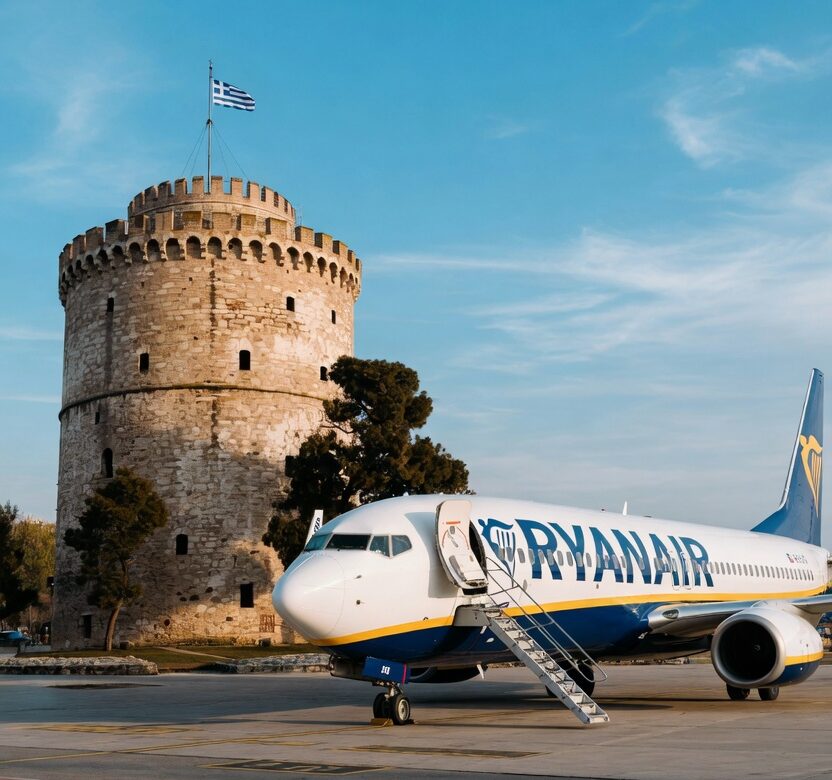
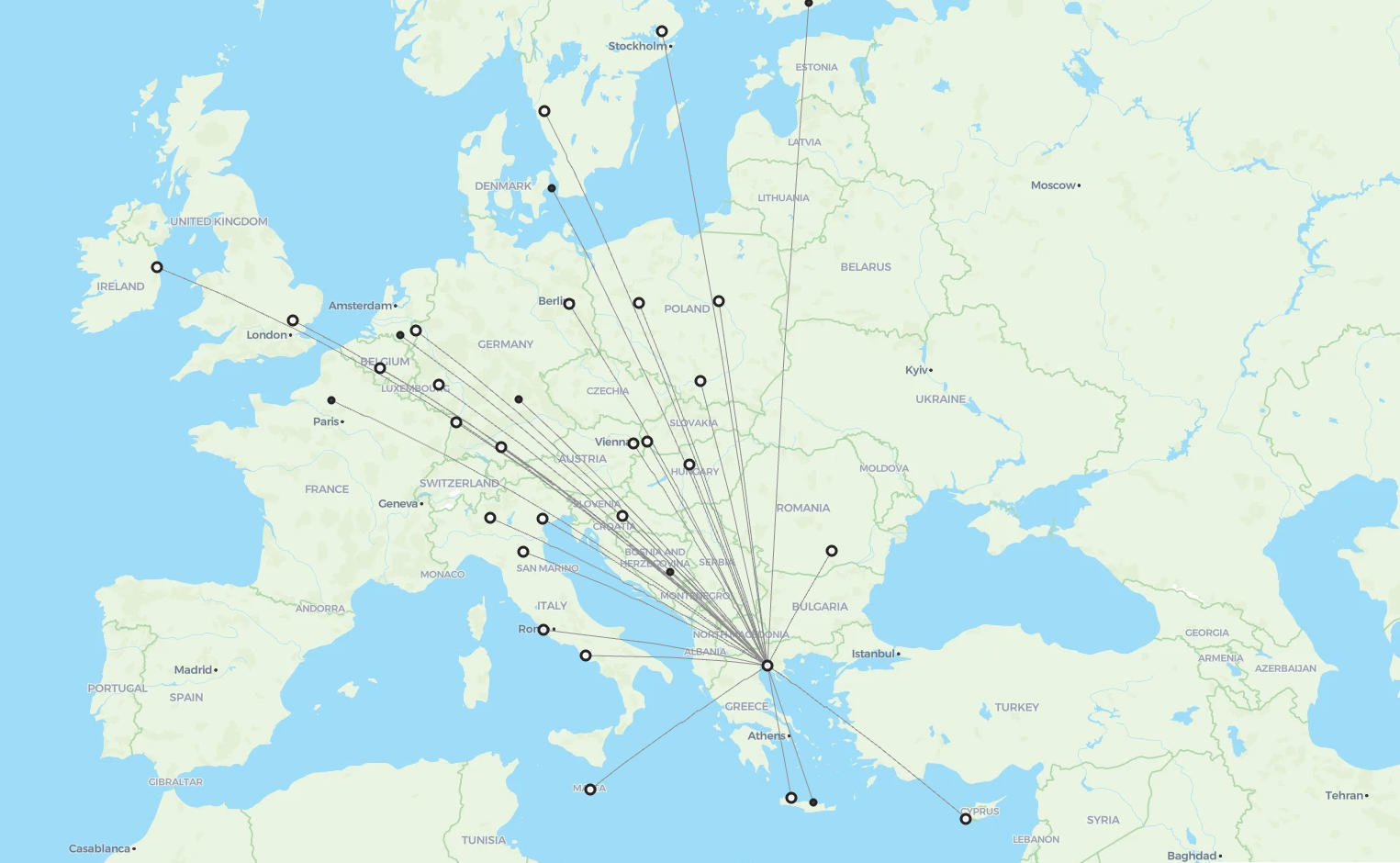
The announcement that Ryanair would close its base at Thessaloniki’s Macedonia International Airport (SKG) hit the city like a thunderbolt in a clear sky. The Irish low-cost giant, which since 2014 has operated a Ryanair base with three aircraft and maintained 30+ routes, confirmed it will withdraw its base, at the end of the 2026 summer season in late October. This means that approximately 200 employees, including pilots, flight attendants and technicians are expected to be redundant. The decision stems from a bitter dispute with airport operator Fraport Greece over a proposed 15% increase in airport charges, particularly parking fees, for the new contract period. Ryanair described the hike as rendering the base commercially unviable and announced it would reallocate the aircraft to more competitive locations across its European network.
How Does Ryanair Operate?
Founded in Dublin in 1985, Ryanair pioneered the ultra-low-cost model in Europe, inspired by the Texas based US carrier Southwest Airlines. The Irish low-cost carrier (LCC) is for years the Europe’s largest LCC in a market of fierce competition including the names of EasyJet (UK), Wizzair (Hungary), Vueling (Spain), Eurowings (Germany), Volotea (Spain/Italy), Transavia (France/Netherlands) among others. Over the past two decades, LCCs have played a catalytic role in the development of numerous tourist destinations across Europe.
Ryanair focuses on point-to-point routes (no complex hub-and-spoke networks), high aircraft utilization (planes fly more hours per day), and a single fleet type (mostly Boeing 737-800s) to minimize maintenance and training costs. It avoids primary airports when possible, favoring secondary or regional ones with lower fees. Fares are kept rock-bottom through aggressive cost control, but the real profit engine is ancillary revenue — charges for checked bags, seat selection, priority boarding, and onboard sales — which can account for roughly one-quarter of total revenue. The airline sells directly via its website and app, bypassing travel agents, and negotiates hard (often publicly threatening route cuts or base closures) to extract the best deals from airports and governments.
This model has made Ryanair hugely successful but also controversial for its labor practices and fee-heavy approach. I remember when I was living in Denmark, its dispute with Copenhagen Airport (CPH) in 2015 (following initial operations in Kastrup from 2012). After establishing a base there, Ryanair closed the facility and relocated aircraft following a Danish labour court ruling that required collective bargaining agreements with local unions over wages and working conditions. The airline refused to sign such agreements, citing uncompetitive costs, and used the closure as leverage — a tactic it has repeated elsewhere as we will see further down.
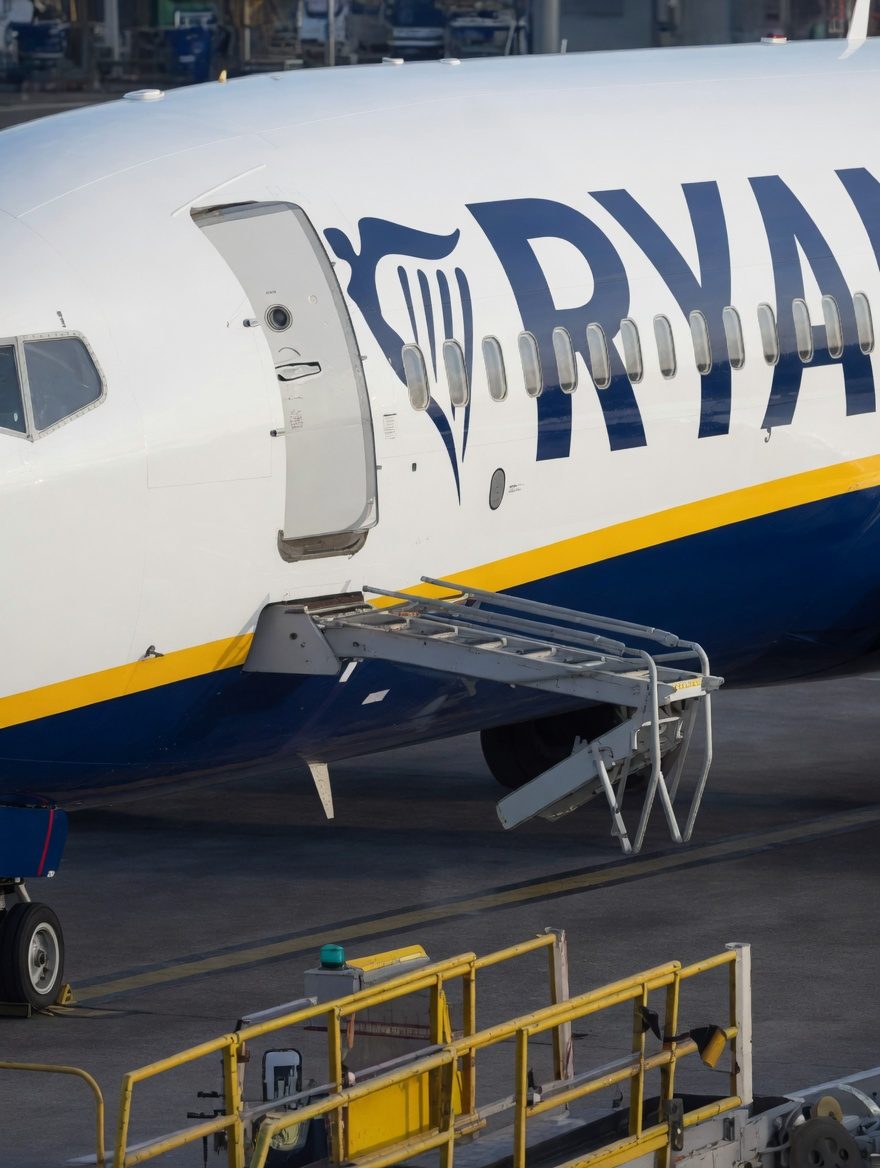
On the other hand, the company is bragging about its innovative approach in many fronts comparing its competitors. For example, Ryanair fully leverages its built-in aircraft stairs as part of its ultra-low-cost model — despite the added weight increasing fuel consumption slightly — by avoiding or reducing expensive airport fees for mobile stairs and jet bridges, enabling very fast turnarounds (often under 30 minutes) through simultaneous front and rear boarding/deboarding, a strategy that scales across thousands of daily flights and ultimately saves the airline millions every year.
What Is Fraport and Which Airports Does It Control
Fraport AG is a German multinational airport management company headquartered in Frankfurt. Its core asset is Frankfurt Airport (FRA), one of Europe’s busiest hubs. It has expanded globally through concessions and joint ventures. Fraport operates Lima Airport (LIM) in Peru, Fortaleza (FOR) and Porto Alegre (POA) in Brazil, and several U.S. airports (including terminals or operations at Baltimore/Washington, Cleveland, Nashville, New York JFK, Newark, Washington Dulles, and Washington Reagan) through Fraport USA.
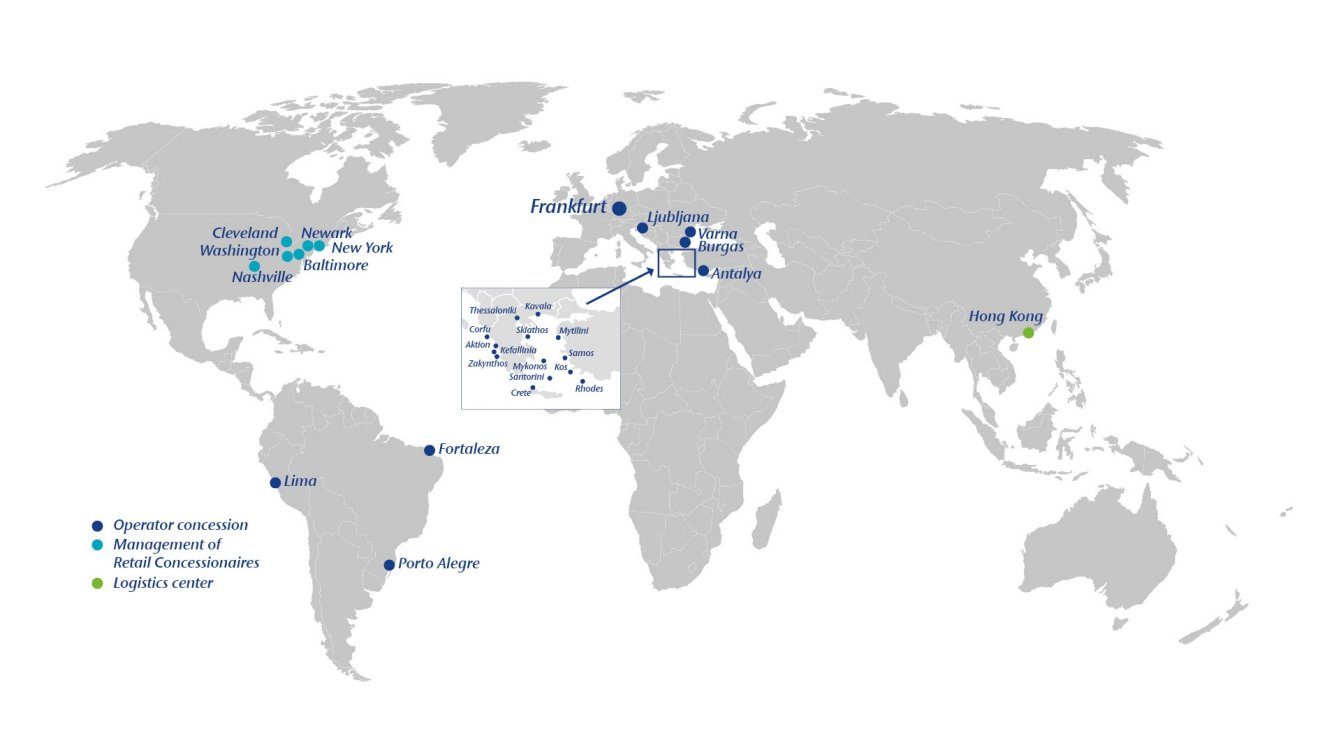
In Europe, Fraport’s most significant portfolio outside Germany is in Greece, where Fraport Greece (a subsidiary) has operated 14 regional airports under a 40-year concession since 2017. The deal, worth €1.2 billion initially, covers Thessaloniki (SKG), as well as popular island gateways like Chania, Corfu, Kavala, Kefalonia, Kos, Mykonos, Mytilini (Lesvos), Rhodes, Samos, Santorini, Skiathos, Zakynthos, and Aktion (Preveza). Fraport invests in infrastructure upgrades (new terminals, runways, photovoltaic parks) in exchange for the right to collect fees and operate commercially. Fraport’s model prioritizes long-term revenue stability, infrastructure modernization, and returns for shareholders — which often means higher or standardized airport charges to cover investments.
Past Clashes Between Fraport and Ryanair
This is not the first time Ryanair and Fraport have been at loggerheads. Before Greece the companies have clashed in Slovenia with regional repercussions. In Ljubljana Airport: in early 2024, Ryanair CEO Eddie Wilson publicly called Ljubljana “simply too expensive” for the airline’s model, ruling out new flights or expansion despite earlier interest. What Ryanair did? it chose to operate as a base the neighbouring Trieste airport (TRS), taking full advantage of the Friuli Venezia Giulia region tax incentives becoming the first regione in Italy to abolish the municipal surcharge (tourist tax) on flights.
In fact, as we saw with the example of Copenhagen airport Ryanair has a history of using base closures or capacity cuts as leverage in fee negotiations, and Fraport-operated sites have seen similar tensions. In Greece, Ryanair has appealed (unsuccessfully) against fee increases at other Fraport airports, such as Rhodes. Fraport sources have described Ryanair’s threats in Thessaloniki as “nothing new,” citing prior similar standoffs in Crete and even other non-Fraport locations like Berlin. The pattern is clear: Ryanair demands ultra-competitive pricing to maintain high-volume, low-yield operations, while Fraport seeks to maximize aeronautical revenue after heavy investment commitments.
The pattern is clear: Ryanair demands ultra-competitive pricing to maintain high-volume, low-yield operations, while Fraport seeks to maximize aeronautical revenue after heavy investment commitments.
Implications for Thessaloniki: Tourism, Real Estate, and Balkan Hub Potential
The closure risks significant short- and medium-term damage to Thessaloniki, Greece’s second-largest city and a gateway to Northern Greece and the Balkans. Ryanair’s base supported strong year-round connectivity (especially to Germany and Italy), driving leisure, VFR (visiting friends/relatives), and some business traffic. Losing the base could mean:
- Tourism revenue hit: Thessaloniki and the region have seen solid growth — airport traffic rose 5.1% in Q1 2026 to 1.47 million passengers. Ryanair’s low fares fill hotels, restaurants, and attractions, particularly in the off-season. Stakeholders warn of reduced visitor numbers, lower occupancy, and knock-on effects for local businesses. Winter connectivity could suffer most, when LCCs are vital.
- Real estate prices: Increased tourism has boosted short-term rentals, hotel investments, and residential demand in the city center and waterfront. A drop in affordable international access could cool investor interest and slow price growth in tourism-linked segments.
- Balkan hub ambitions: Thessaloniki has geographic potential as a regional hub linking Greece with Bulgaria, North Macedonia, Albania, and beyond. However, without aggressive LCC support, it risks losing ground. Neighboring airports are already pulling ahead (see below), making it harder for Thessaloniki to attract transfer traffic or position itself as the Balkans’ low-cost gateway.
Growing Competition from Neighboring Airports
Thessaloniki’s struggles stand in sharp contrast to its neighboring destinations, where more attractive commercial terms, lower airport taxes, and proactive courting of low-cost carriers have enabled rapid LCC expansion — successfully putting these regions firmly on the European tourism map:
- Sofia (Bulgaria): Ryanair maintains a significant 4-aircraft base and continues to expand its route network. Wizz Air has an even stronger presence with an 8-aircraft base (8th aircraft added for summer 2026), supporting dozens of routes and increased frequencies.
- Skopje (North Macedonia): Wizz Air operates a large and growing 7-aircraft base (seventh A321neo added for peak summer 2026), serving dozens of European destinations. Ryanair has no dedicated base here. EasyJet operates some direct services but no major base.
- Tirana (Albania): Ryanair has rapidly scaled up to a 4-aircraft base (backed by a US$400 million investment), driving explosive traffic growth across 44 routes. Wizz Air has allocated around 11–15 aircraft during peak summer 2026, making Tirana one of its strongest regional bases
As we saw previously with the example of Ljubljana – Trieste, these airports have offered significantly better commercial terms, allowing LCCs to station substantial fleets and capture traffic that might otherwise have flowed through or to Thessaloniki. As a result, they are increasingly positioning themselves as the new low-cost gateways for the Balkans.
Greece’s Shortcomings – Lack of Visionary Policies
Critics argue that the situation reflects a deeper lack of long-term vision in Greek aviation policy. The 2010s privatization of regional airports brought necessary investment after the financial crisis but locked the country into rigid, profit-driven concession agreements. Successive governments have been accused of focusing on immediate fiscal benefits rather than strategic incentives to retain high-volume carriers. Unlike neighboring countries that actively court low-cost airlines with flexible deals and support, Greece’s approach has often been more passive, leaving airports like Thessaloniki vulnerable in negotiations.
This lack of strategic foresight was dramatically highlighted in January 2026, when a major communications blackout — caused by outdated air traffic control systems and a faulty antenna — paralyzed Greek airspace for nearly eight hours on January 4. Flights nationwide were suspended, thousands of passengers were stranded, and dozens of incoming aircraft were diverted to airports in neighboring countries such as Sofia, Istanbul, and Rome. The incident, which severely affected Athens International Airport (Eleftherios Venizelos), reignited debates over ageing infrastructure and delayed modernization plans, exposing systemic vulnerabilities in Greece’s aviation sector amid a booming tourism industry.
Conclusion
The fact that the German company dominates the Greek market puts pressure to LCC presence risking tourist development of Greece’s periphery all year long and endangering the goal of extending the tourist season in the low period between November – March, something which is a strategic goal for the country. A comparison on how Cyprus operates succesfully its aviation and its international airport infrastructure is worthy to be made at some point.
The sudden closure of Ryanair’s Thessaloniki base is more than a commercial disagreement — it is a stark illustration of the challenges facing Greek regional aviation in the light of private stakeholders commercial antagonisms in a fluid geopolitical and economic environment. Without swift, pragmatic intervention and a more visionary national strategy, Thessaloniki and other regional Greek airports risk losing hard-won momentum in tourism while Salonica’s aspirations to become a Balkan connectivity leader slip further away. The city has been particularly exposed since 2023 after Tempi tragedy, with no international railway connections to neighboring countries (services to Bulgaria, North Macedonia, and Turkey long suspended), making air travel the only practical link to the region. The combination of this Ryanair base loss and chronic infrastructure delays threaten to leave Thessaloniki increasingly isolated.
The coming months will show whether local and national authorities can turn this “bolt from the blue” into a catalyst for necessary change before it is too late.